Here is the translated code with all tags and structures left completely intact. The Spanish text and `alt` attributes have been translated to English:
“`text
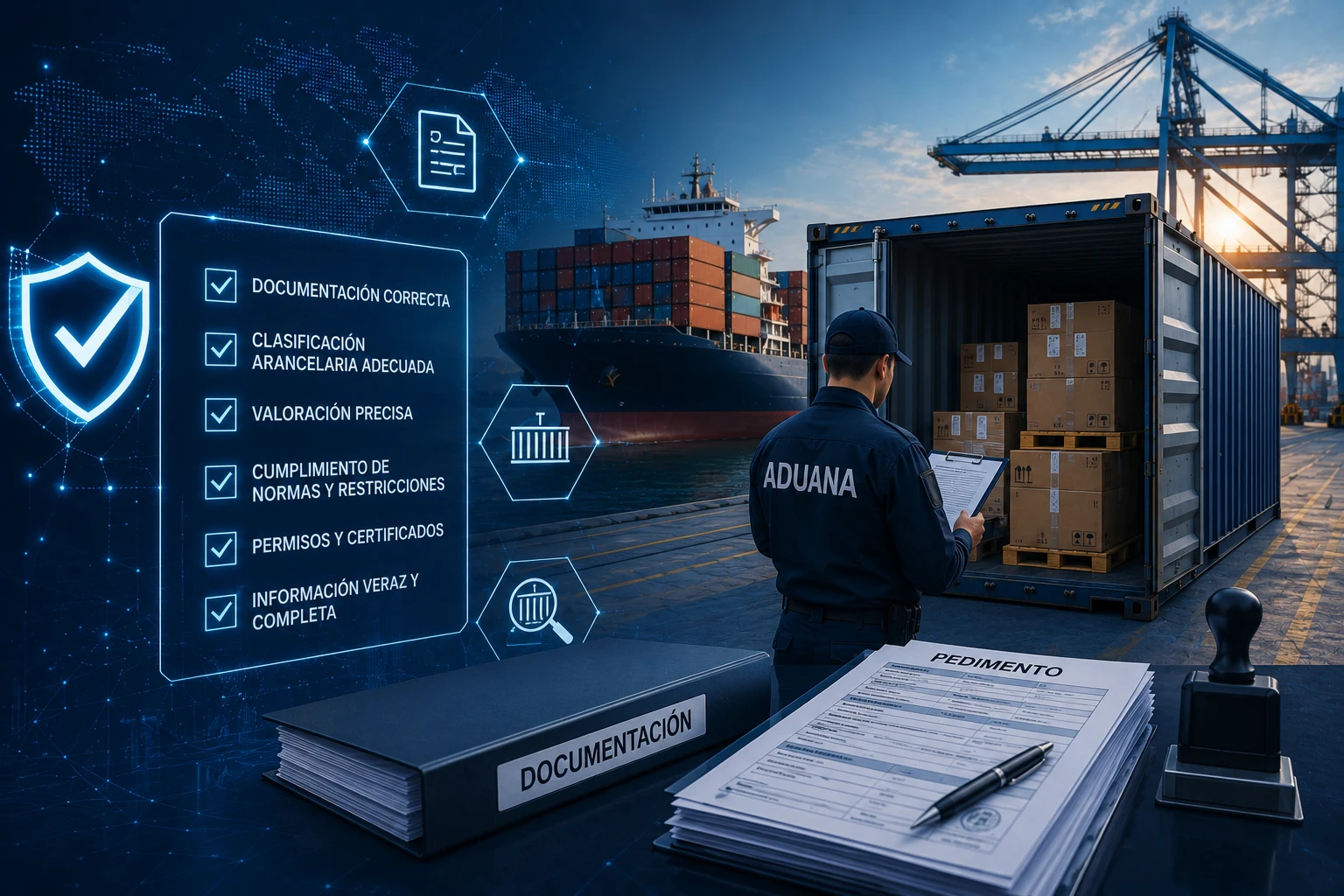
Goods are detained at customs in Mexico mainly due to incorrect or incomplete documentation, inconsistent declared value, incorrect tariff classification, or lack of specific permits. Most detentions are preventable if the documentation is reviewed prior to arrival.

Why are goods detained at customs?
A customs detention is not automatically a serious problem — in many cases, it is resolved by presenting the missing document or correcting a piece of data. The problem is time: every day of detention implies storage costs at customs, delivery delays, and, depending on the line of business, a direct impact on sales or commitments to clients.
Understanding the most common causes of detention is the first step to preventing them.
Cause 1: Incomplete or erroneous documentation
The most frequent reason for detention is documentation. The most common errors include:
– Incorrect importer data (RFC/Tax ID, name, or tax address)
– Declared value on the invoice that does not match the SAT’s reference prices
– Vague or generic product description, or one that does not correspond to the tariff classification
– Packing list with data that does not match the bill of lading or the invoice
– Incorrect number of packages or weights
The solution is to review all documentation with the customs broker before the shipment departs from the origin.
Cause 2: Incorrect tariff classification
Every product has a tariff classification assigned in the Mexican customs system (TIGIE). Incorrectly classifying a product can result in the payment of incorrect taxes or, in severe cases, a customs irregularity.
The tariff classification is determined by the customs broker, but the importer must provide a complete and accurate technical description of the product for the classification to be correct.
Cause 3: Lack of prior permits or NOM standards
Many products require permits or authorizations before they can enter Mexico. If the permit does not exist at the time of clearance, the goods are detained until it is obtained — and some permits take weeks.
The most affected sectors:
– Consumer products (textiles, footwear, electronics, toys): NOM labeling and safety standards
– Food and beverages: COFEPRIS authorization
– Agricultural products: SENASICA permit
– Products with special regulation: Ministry of Economy authorization
The key is to identify what permits your product requires before placing the order, not at the time of arrival.
Cause 4: RFC (Tax ID) problems or importer’s tax status
If the importer’s RFC has tax debts, is on the SAT’s blacklist, or has irregular situations, the customs broker cannot process the customs declaration (pedimento). Verifying the tax status before each importation prevents surprises.
Cause 5: Customs inspection — red light
When presenting the customs declaration at customs, the system randomly assigns an inspection: green (passes without inspection) or red (mandatory physical inspection). The red light is not a penalty — it is a normal procedure. However, if discrepancies are detected between the declared and actual goods during the inspection, fines or detention may occur until clarified.
Having the correct documentation and properly described goods minimizes the risk during a red light inspection.
What to do if your goods are already detained
If the goods are already detained at customs:
1. Identify the exact reason for the detention with your customs broker
2. Gather or correct the missing document or permit
3. Act fast — customs storage days are charged from day one
4. In cases of irregularities, a customs lawyer may be necessary
Frequently asked questions about customs detention in Mexico
How much does it cost to store detained goods at customs?
Costs vary depending on the port and the bonded warehouse, but they can be significant — from a few tens of dollars per day for small shipments to hundreds of dollars for full containers. Acting fast is always the priority.
How long can goods be detained at customs without being considered abandoned?
In Mexico, goods that are not claimed or cleared within the established timeframe may fall into abandonment and be auctioned by the SAT. The timeframe varies, but generally ranges between 30 and 90 days depending on the type of goods and the customs office.
Can you import without a customs broker to avoid errors?
No. In Mexico, the customs clearance of commercial goods is mandatory through a certified customs broker. What you can do is choose a broker with experience in your type of product and ensure they review the documentation before arrival.
At IMPORTEX GROUP, we review your documentation, identify required permits, and coordinate with the customs broker so that your goods are released without delays. Contact us before your next shipment.