Here is the translated code with all tags and structures left completely intact:
“`text
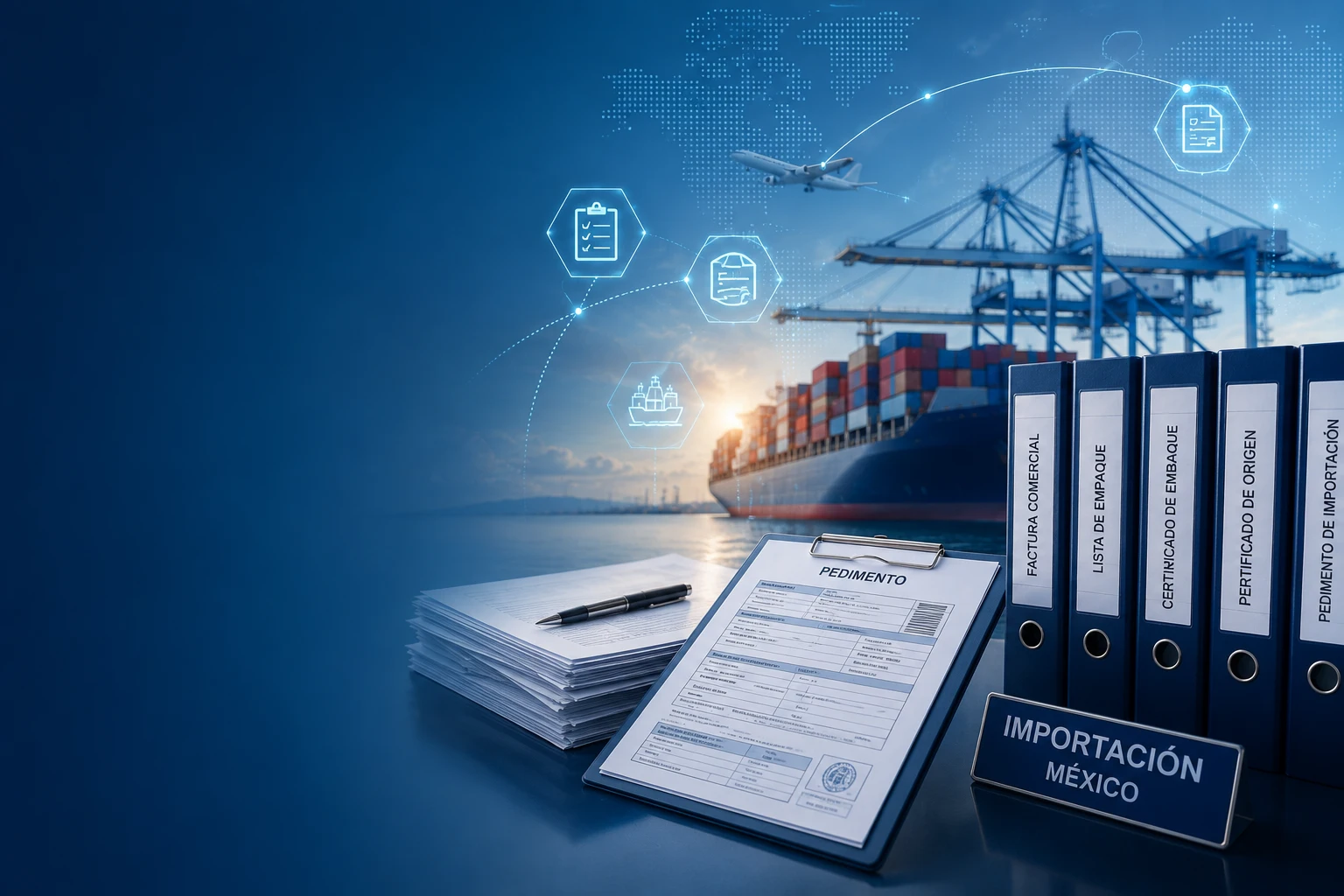
To import goods to Mexico, you need at a minimum: a commercial invoice, a packing list, and the transport document (bill of lading or air waybill). Depending on the type of product, certificates of origin, NOM standards, and permits from agencies like COFEPRIS or SENASICA may also be required.
Why is documentation so important in an importation?
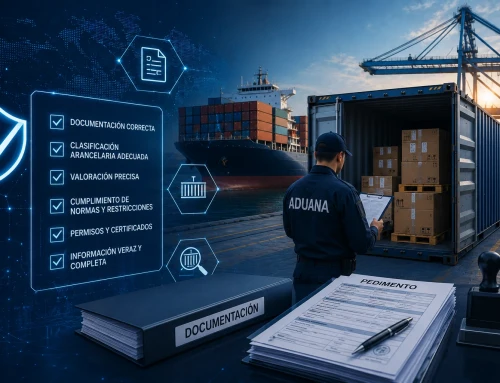
Customs documentation is not a minor procedure. An incorrect, incomplete document, or one with mismatched data can leave your goods detained at customs for days or weeks. This translates into storage costs, delivery delays, and, in some cases, fines.
Properly preparing documents before the arrival of goods is the most effective way to avoid delays.
Basic mandatory documents in every importation
These documents are required in practically every commercial importation to Mexico, regardless of the type of product:
Commercial Invoice
Issued by the supplier, it must include: a detailed description of the product, quantity, unit price, total value, country of origin, exporter and importer details, and the agreed Incoterm. The value declared on the invoice is the basis for tax calculation.
Packing List
Details the contents of each box or pallet: number of packages, gross weight, net weight, dimensions, and description of the contents. It is essential for customs inspection and physical verification of the cargo.
Bill of Lading (BL) or Air Waybill (AWB)
It is the transport contract between the shipper and the shipping line or airline. It proves that the goods were shipped and who the authorized consignee is to receive them in Mexico. For sea shipments, it is called a Bill of Lading; for air shipments, an Air Waybill (AWB).
Additional documents depending on the type of product
In addition to the basic documents, certain products require additional documentation before they can be cleared through customs:
Certificate of Origin
Necessary when you want to apply tariff preferences under trade agreements (such as the CPTPP between Mexico and China for certain products). It proves that the product was manufactured in the declared country of origin.
NOM Standards (Official Mexican Standards)
Many consumer products must comply with NOM standards to enter Mexico. Some require Spanish labeling from the origin; others require laboratory testing in Mexico. The most affected sectors include textiles, footwear, electronics, toys, and food.
Permits from regulatory agencies
Depending on the type of goods, the following may be involved:
– COFEPRIS: pharmaceuticals, cosmetics, processed foods, medical devices
– SENASICA: agricultural products, animals, plants, and derivatives
– SEMARNAT: products with environmental impact
– Ministry of Economy (Secretaría de Economía): some products subject to quotas or prior permits
The import declaration (Pedimento)
The pedimento is the official customs document generated by the certified customs broker at the time of clearance. It consolidates all the importation information: description of the goods, tariff classification, customs value, taxes to be paid, and importer details. This document serves as the fiscal and customs proof of the operation.
Common documentation errors that cause customs detentions
The most frequent problems that detain goods at Mexican customs are:
– Declared value on the invoice that does not correspond to the real market price
– Vague or generic product description that does not match the tariff classification
– Incorrect importer data or RFC (Tax ID) with problems at the SAT
– Lack of a NOM permit for products that require it
– Packing list with data that does not match the BL or the invoice
Frequently asked questions about import documents to Mexico
What happens if a document is missing at customs?
The goods are placed on hold until the omission is rectified. In some cases, the missing document can be presented; in others, the goods may be seized if the document is essential for clearance.
Can the commercial invoice be in English or Chinese?
Yes, but the customs broker may require a Spanish translation if the customs authority requests it. It is recommended that the invoice be in English (the standard language of international trade) with clear and unambiguous data.
How long before arrival should I have the documents ready?
Ideally, before the ship sails from the port of origin. This allows time to review any errors and avoid delays upon arrival in Mexico.
At IMPORTEX GROUP, we review your documentation prior to arrival so that customs clearance is fast and without surprises. Contact us for your next importation.